
- 0
- 1,083 word
Wooden structures and furniture are prized for their beauty, durability, and timeless appeal. However, they are also vulnerable to wood-boring insects such as woodworm, termites (in some regions), and other pests that can weaken timber over time. Choosing the right treatment is essential for protecting your investment and preserving the structural integrity of your home.
Today, homeowners have more choices than ever before. Alongside traditional synthetic wood pest treatments, there are a variety of natural and low-chemical alternatives, including moisture management, heat-based technologies, and integrated pest management strategies. Understanding the strengths and limitations of each approach will help you make an informed decision.
In this guide, we’ll compare natural and synthetic wood pest treatments, explain how they work, and discuss when each option may be appropriate.
Understanding Wood Pests
Before comparing treatments, it’s important to understand the pests involved.
Common wood-damaging insects include:
- Woodworm (wood-boring beetles)
- Termites (depending on the region)
- Carpenter ants
- Powderpost beetles
- Deathwatch beetles
- House longhorn beetles
Each pest behaves differently, which means the most effective treatment can vary depending on the species and the extent of the infestation.
What Are Natural Wood Pest Treatments?
Natural or low-chemical wood pest treatments focus on prevention and physical methods rather than relying primarily on synthetic insecticides.
These approaches may include:
- Moisture control
- Improved ventilation
- Heat-based treatments
- Microwave woodworm treatment
- Physical barriers
- Regular inspections
- Good timber maintenance
The goal is to reduce conditions that attract pests while treating infestations with minimal environmental impact where possible.
What Are Synthetic Wood Pest Treatments?
Synthetic treatments use approved insecticides or wood preservatives to eliminate or deter wood-damaging insects.
Depending on the product, they may be applied through:
- Spraying
- Brushing
- Injection
- Pressure treatment (typically before timber is installed)
Many synthetic products also provide residual protection that helps reduce the likelihood of reinfestation.
How Natural Treatments Work
Natural methods generally focus on making timber less attractive to pests.
Examples include:
Moisture Control
Keeping wood dry discourages many wood-boring insects and fungi.
Improved Ventilation
Good airflow helps reduce humidity around structural timber.
Routine Inspections
Early detection prevents minor infestations from becoming major structural problems.
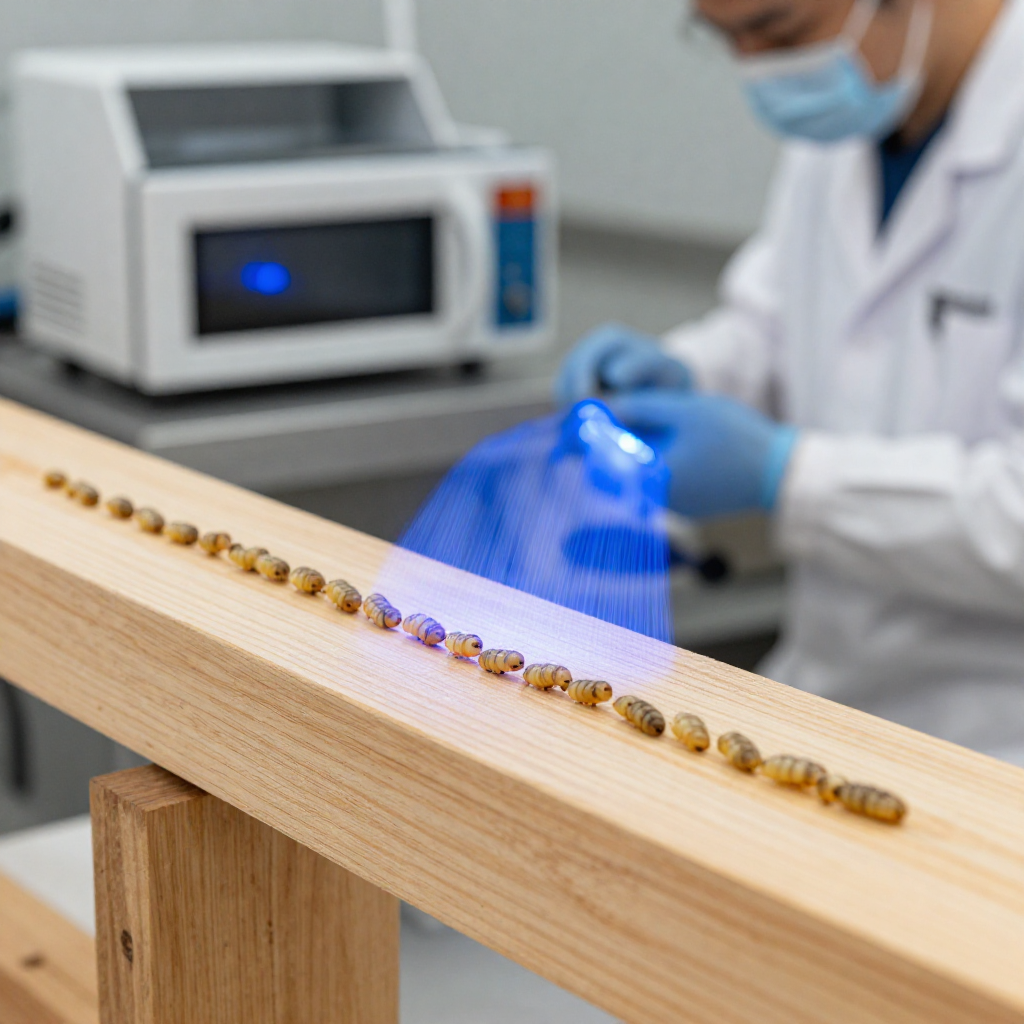
Microwave Woodworm Treatment
Professional microwave systems generate controlled heat inside timber through dielectric heating, eliminating:
- Woodworm larvae
- Beetle eggs
- Pupae
- Adult beetles
without applying chemical pesticides.
How Synthetic Treatments Work
Chemical wood preservatives are designed to:
- Eliminate active insects.
- Protect treated timber.
- Reduce future insect activity.
- Penetrate exposed wood to varying depths depending on the product and timber type.
When selected and applied correctly, synthetic treatments remain an effective option for many woodworm infestations.
Comparing Natural and Synthetic Treatments
| Feature | Natural / Low-Chemical Methods | Synthetic Treatments |
|---|---|---|
| Uses Synthetic Pesticides | No or minimal | Yes |
| Leaves Chemical Residues | No | Usually yes |
| Focus on Prevention | Strong | Moderate |
| Residual Protection | Limited | Often available |
| Environmental Impact | Lower | Moderate |
| Suitable for Heritage Buildings | Often | Depends on the product |
Both approaches can be effective when matched to the right situation.
Advantages of Natural Treatments
Natural methods offer several important benefits.
Reduced Chemical Use
Many homeowners prefer minimizing pesticide applications inside their homes.
Environmentally Friendly
Lower chemical use helps reduce environmental impact.
Preservation of Original Timber
Natural methods often emphasize retaining existing wood rather than replacing it.
Suitable for Historic Buildings
Chemical-free treatments such as microwave technology are often considered where preserving original materials is a priority.
Advantages of Synthetic Treatments
Synthetic treatments also provide significant benefits.
Proven Performance
Modern wood preservatives have been developed through extensive testing and continue to be widely used by professionals.
Residual Protection
Many products remain active after application, helping protect timber from future infestations.
Broad Availability
Professional treatment products are widely available for different types of wood and pest problems.
Limitations of Natural Treatments
Natural approaches also have limitations.
- Moisture control alone will not eliminate active woodworm.
- Regular inspections are essential.
- Some methods require professional equipment.
- Severe structural damage may still require repairs.
Limitations of Synthetic Treatments
Synthetic treatments may also have practical considerations.
- Some products may leave chemical residues.
- Ventilation and drying times should be followed.
- Surface coatings can affect penetration.
- Professional application is recommended for many structural infestations.
Which Treatment Is Better?
There is no single answer.
The most suitable treatment depends on:
- Pest species
- Severity of infestation
- Accessibility
- Timber condition
- Building construction
- Conservation requirements
- Personal preferences
In many situations, combining preventive maintenance with targeted professional treatment provides the best long-term results.
Integrated Pest Management (IPM)
Many pest control specialists now recommend Integrated Pest Management (IPM).
IPM combines:
- Routine inspections
- Moisture management
- Building maintenance
- Accurate pest identification
- Physical prevention methods
- Targeted treatments only when necessary
This balanced strategy often provides effective pest control while reducing unnecessary chemical use.
Tips for Long-Term Timber Protection
Regardless of the treatment chosen, protect your timber by:
- Repairing roof leaks promptly.
- Improving ventilation.
- Reducing indoor humidity.
- Inspecting timber annually.
- Monitoring for fresh frass and exit holes.
- Addressing damp conditions quickly.
- Maintaining protective finishes where appropriate.
Consistent maintenance is essential for preventing future infestations.
Common Myths About Wood Pest Treatments
Myth 1: Natural Treatments Always Replace Chemical Treatments
Fact: Natural methods are highly valuable, but severe infestations may still require professional chemical treatments or other targeted interventions.
Myth 2: Synthetic Treatments Damage Every Type of Timber
Fact: Approved products are designed for specific applications and should be selected and applied according to manufacturer instructions.
Myth 3: One Treatment Lasts Forever
Fact: Ongoing maintenance, inspections, and moisture control remain essential regardless of the treatment method.
When Should You Contact a Professional?
Professional advice is recommended if:
- Structural timber is affected.
- Fresh frass continues appearing.
- New exit holes develop.
- Valuable antique furniture requires treatment.
- Moisture problems persist.
- You’re unsure which treatment method is appropriate.
A qualified timber preservation specialist can inspect your property, identify the pest species, and recommend the most effective treatment based on your building’s condition and long-term maintenance goals.
Conclusion
Both natural and synthetic wood pest treatments have important roles in protecting timber from wood-boring insects. Natural approaches—including moisture control, regular inspections, Integrated Pest Management, and microwave woodworm treatment—focus on prevention and reducing chemical use while preserving valuable timber. Synthetic treatments remain effective for many infestations and can provide residual protection when professionally selected and applied.
Rather than viewing these methods as competing solutions, they should be considered complementary tools. The best results often come from combining preventive maintenance with the most appropriate treatment for the specific infestation. With professional guidance, early detection, and consistent care, homeowners can protect wooden structures while balancing effectiveness, sustainability, and long-term timber preservation.Visit online https://www.shashel.eu for more details .
Author

admin@portal-national.com
Related Posts
Residential Garage Storage Ideas That Actually Work
- 0
- 1,369 word
A garage can quickly become the catch-all space for tools, sports equipment, seasonal decorations, household supplies, and everything else that does not...
Read out all
How to Select the Right Wristbands for Successful Events
- 0
- 853 words
Planning an event involves many details, and access control is one of the most important. Whether you are organizing a festival, school...
Read out allHoney Badger Gun Platform Complete Guide to Modern Compact Firepower
- 0
- 842 words
The modern firearms world continues to evolve with lightweight engineering, suppressed performance, and compact platforms designed for efficiency. Among these, the Honey...
Read out all
How to Detect Termites Before Serious Damage
- 0
- 840 words
Termites are among the most destructive pests that can affect a home, especially properties built with timber. These tiny insects quietly feed...
Read out allA Practical Guide to Choosing the Right Family Dentist for Lifelong Oral Health
Finding the right dental care provider for your household can shape your long-term health and comfort. A trusted Family Dentist plays a...
Read out allNiğde LEED Danışmanlık Firmaları – Uzman Şirketler
Niğde, gelişen sanayi altyapısı, yeni kamu yatırımları ve artan ticari projeleriyle sürdürülebilir yapılaşma açısından potansiyelini her geçen gün artıran şehirlerden biridir. Bölgenin...
Read out all