
- 0
- 1,369 word
A garage can quickly become the catch-all space for tools, sports equipment, seasonal decorations, household supplies, and everything else that does not have a designated place indoors. Effective residential garage storage makes it easier to keep these belongings organized without sacrificing room for vehicles or everyday activities.
Superior Garage Flooring understands that a functional garage requires more than simply adding shelves. It needs a storage plan built around how the household actually uses the space.
Why Residential Garage Storage Needs a Plan
Good garage organization starts before purchasing storage products. A garage may have plenty of square footage but still feel cramped when belongings are scattered across the floor or stored without a system.
Begin by identifying what needs to stay in the garage and how frequently each item is used. Everyday tools should be easy to reach, while seasonal decorations or rarely used equipment can occupy higher or less accessible areas.
Consider dividing the garage into functional zones such as:
- Automotive supplies and maintenance equipment
- Gardening and outdoor tools
- Sports and recreational equipment
- Household storage
- Workshop or DIY areas
- Seasonal decorations
This approach creates a logical relationship between storage and activity. Instead of searching through multiple boxes for one item, homeowners can quickly identify where something belongs.
Use Vertical Garage Storage to Free Floor Space
One of the most effective ways to improve residential garage storage is to use vertical space. Walls and ceiling areas are often underused, even though they can hold substantial amounts of equipment when properly planned.
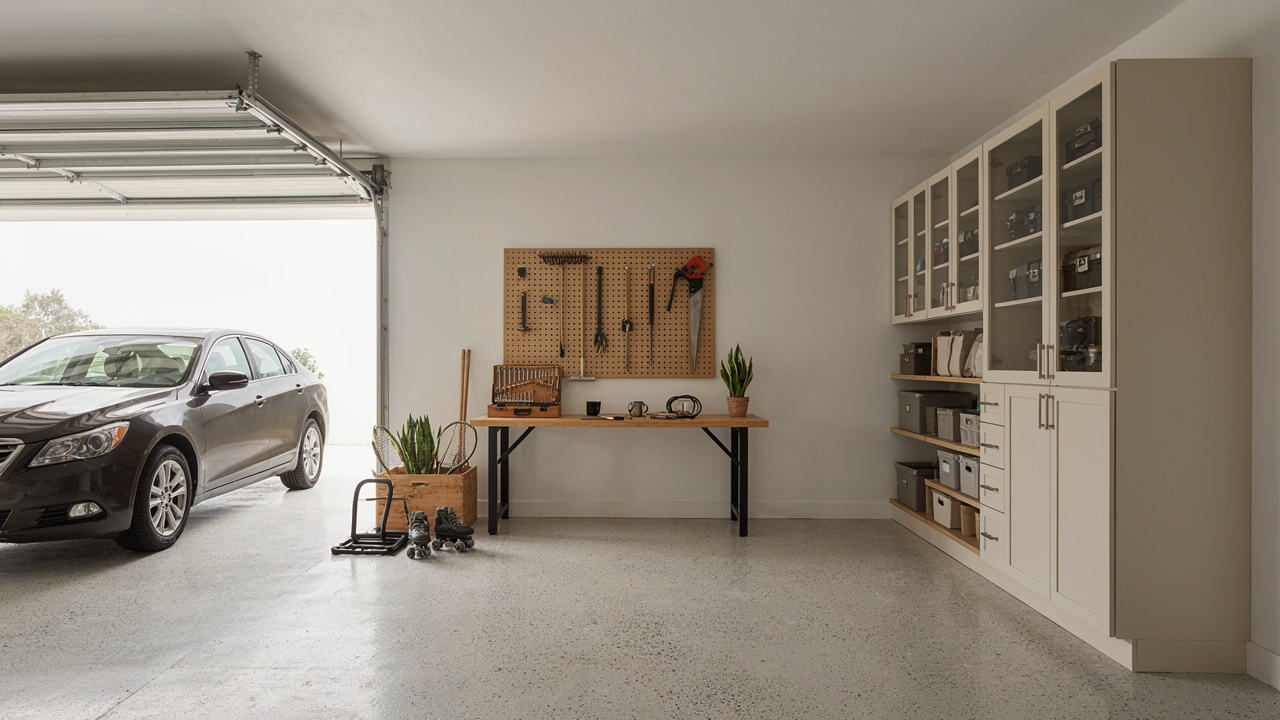
Wall-mounted garage storage systems can accommodate tools, containers, gardening equipment, and frequently used supplies. Slatwall panels, pegboards, hooks, cabinets, and shelving can each serve different purposes.
The key is matching the storage method to the item. Lightweight hand tools may work well on hooks or pegboards, while heavier containers may require sturdy shelving or cabinets designed for appropriate loads.
Keeping belongings off the floor also creates wider walking paths and makes sweeping or cleaning easier.
Make Garage Shelving Work Harder
Garage shelving is useful when it is organized according to frequency of use. Rather than filling every shelf from floor to ceiling, place frequently accessed items between waist and eye level.
Heavy containers should generally remain lower, reducing the need to lift them from high shelves. Lightweight seasonal items can occupy higher areas when they are not accessed regularly.
Clear containers can also make garage shelving more practical. When contents are visible, homeowners can identify supplies without opening multiple boxes.
A simple labeling system adds another layer of organization. Labels are especially helpful when several containers have similar appearances or when different household members use the garage.
Consider Overhead Garage Storage Carefully
The ceiling can provide valuable storage space for items that are bulky but not frequently needed. Overhead racks can be useful for seasonal decorations, camping equipment, luggage, and other belongings that would otherwise occupy floor or wall space.
However, overhead garage storage should never interfere with garage doors, lighting, vehicles, or walking areas. Measure available clearance before installation and account for the height of stored containers.
It is also important to consider accessibility. Storage that requires unsafe climbing or awkward lifting may create more problems than it solves. A step ladder should be used on a stable surface when necessary, and frequently used items should remain within comfortable reach.
Build Storage Around Garage Activities
A residential garage may serve several purposes beyond parking. Some households use the space as a workshop, hobby area, home gym, gardening station, or equipment storage area.
Storage should support these activities rather than compete with them.
For example, a homeowner who frequently works on DIY projects may benefit from a dedicated workbench with nearby tool storage. A household with bicycles may need wall-mounted bike storage that keeps the equipment accessible without blocking vehicles.
Creating activity-based zones can make the garage feel significantly more functional. Each zone should have a clear purpose and enough surrounding space to use the stored equipment safely.
Protect Frequently Used Items From Clutter
A storage system should make it easier to put things away, not create another complicated task. If an item is difficult to return to its designated location, it will eventually end up on the floor, workbench, or another convenient surface.
Open storage can work well for frequently used tools and equipment because items remain visible and accessible. Cabinets may be preferable for supplies that need protection from dust or for belongings that homeowners want kept out of sight.
Hooks are particularly useful for items such as:
- Garden hoses
- Extension cords
- Hand tools
- Brooms and rakes
- Sports equipment
- Protective gear
The goal is to create storage habits that are simple enough to maintain.
Don’t Ignore Garage Floor Space
Although vertical and overhead systems can reduce clutter, the floor still plays an important role in garage organization. Clear floor space allows vehicles to enter and exit comfortably while providing room for projects, maintenance, and movement.
Before adding storage, establish the minimum amount of floor space needed for vehicles and walking paths. Then determine how much room remains for cabinets, shelving, workbenches, and other equipment.
The garage floor itself also deserves consideration. A clean, durable surface can make routine maintenance easier and contribute to a more organized environment. Storage systems are easier to appreciate when the area underneath them is easy to clean and maintain.
Create a Residential Garage Storage System That Lasts
Organization should not depend on a major cleanup every few months. A successful storage system makes everyday maintenance straightforward.
Use these habits to keep the garage organized:
- Assign every category a home. Decide where tools, sports gear, seasonal items, and household supplies belong.
- Keep frequently used items accessible. Avoid placing everyday equipment behind rarely used belongings.
- Return items immediately. Small daily habits prevent clutter from becoming overwhelming.
- Review storage periodically. Remove broken, duplicate, or unused items before they consume valuable space.
- Leave room for future needs. Avoid filling every cabinet, shelf, and storage rack to maximum capacity.
A little unused storage capacity can be valuable. It provides room for future purchases without forcing homeowners to redesign the entire garage.
Choose Storage Based on Safety and Durability
Appearance matters, but garage storage should primarily be practical. Storage systems need to be appropriate for the weight and type of items they hold.
Heavy equipment should be stored using systems rated for the expected load. Wall-mounted systems must be installed correctly and attached to suitable structural points. Shelving should remain stable, while cabinets and containers should not create obstacles in high-traffic areas.
Homeowners should also consider environmental conditions. Garages can experience temperature fluctuations, humidity, dust, and exposure to water or automotive substances. Selecting storage materials designed for garage environments can help maintain performance over time.
Think Beyond Traditional Garage Organization
The best residential garage storage strategy is not necessarily the one with the most cabinets or shelves. It is the one that makes the garage easier to use.
Before buying anything, measure the walls, ceiling height, vehicle clearance, doors, windows, and existing fixtures. Then map out where different activities take place and identify which belongings need the quickest access.
This planning process can reveal opportunities that are easy to overlook. A narrow wall may accommodate vertical tool storage. An unused corner might fit a compact cabinet. Space above a vehicle may be suitable for carefully planned overhead storage.
The result is a garage where storage supports the household instead of competing with it.
Final Thoughts on Residential Garage Storage
Effective residential garage storage is about more than putting clutter into boxes. It is about creating a practical system that connects storage locations with everyday habits, available space, and the activities that happen inside the garage. Superior Garage Flooring recognizes that thoughtful organization can help homeowners create a garage that is easier to use and maintain.
Start by sorting belongings, establishing functional zones, and protecting essential floor space. Then combine wall storage, shelving, cabinets, hooks, and carefully planned overhead solutions based on what each category requires.
When every item has a logical home and frequently used belongings remain accessible, maintaining an organized garage becomes far easier. With thoughtful planning, even a busy residential garage can support parking, storage, projects, hobbies, and household needs without constantly feeling overcrowded.
Author

admin@portal-national.com
Related Posts

Natural vs. Synthetic Wood Pest Treatments Compared
- 0
- 1,083 word
Wooden structures and furniture are prized for their beauty, durability, and timeless appeal. However, they are also vulnerable to wood-boring insects such...
Read out all
How to Select the Right Wristbands for Successful Events
- 0
- 853 words
Planning an event involves many details, and access control is one of the most important. Whether you are organizing a festival, school...
Read out allHoney Badger Gun Platform Complete Guide to Modern Compact Firepower
- 0
- 842 words
The modern firearms world continues to evolve with lightweight engineering, suppressed performance, and compact platforms designed for efficiency. Among these, the Honey...
Read out all
How to Detect Termites Before Serious Damage
- 0
- 840 words
Termites are among the most destructive pests that can affect a home, especially properties built with timber. These tiny insects quietly feed...
Read out allA Practical Guide to Choosing the Right Family Dentist for Lifelong Oral Health
Finding the right dental care provider for your household can shape your long-term health and comfort. A trusted Family Dentist plays a...
Read out allNiğde LEED Danışmanlık Firmaları – Uzman Şirketler
Niğde, gelişen sanayi altyapısı, yeni kamu yatırımları ve artan ticari projeleriyle sürdürülebilir yapılaşma açısından potansiyelini her geçen gün artıran şehirlerden biridir. Bölgenin...
Read out all